

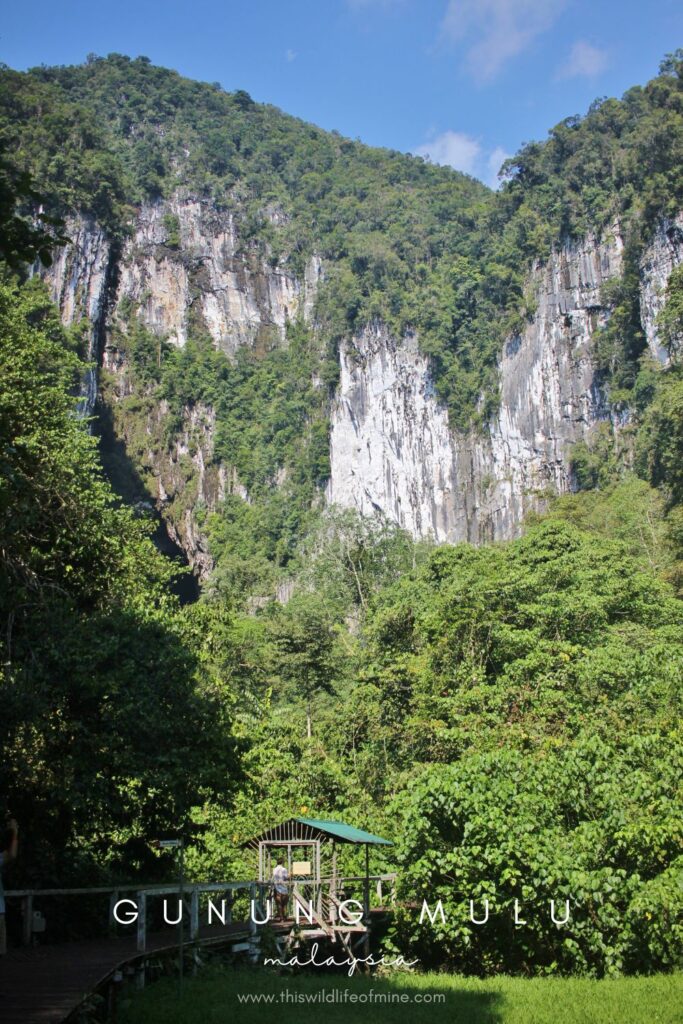
Mulu National Park holds a special place in my heart. Home to some of the largest caves in the world, wildlife-filled rainforest and incredible hiking, Mulu is the true meaning of the word ‘awesome’. Its beauty and extraordinary scenery alone would have cemented its place in my memory, but I’m also extremely grateful to this remote park.
The night before I was due to fly to Mulu, my beloved dog of over sixteen years passed away. Luckier than most, I got to say goodbye to him via Skype, a privilege not many travellers get. But I was still completely and utterly devastated. I cried myself to sleep that night. I cried on the 30-minute flight from Miri. And I cried several times again over the next few days. But I didn’t curl up into a ball and shut myself away (completely, at least) the way I had thought I would. I might have, had I been anywhere else. But flights were booked, and Mulu National Park is not somewhere you waste your time.
From caves to wildlife to forest waterfalls, do not miss the following when visiting Mulu.


Disclaimer: this website contains affiliate links. If you click on these links and make a purchase or booking, I will earn a small commission at no extra cost to you. This helps me to continue this blog and help wildlife around the world!
The Caves of Mulu National Park
I only had two days to see as much of this UNESCO World Heritage Site as possible, but the way the tours are organised, that actually was plenty of time to see the main highlights. If you spend longer in the area, there are more caves and hiking trails to explore (see more below). There are five main show caves, and I visited four of them on two tours.
Lang & Deer Caves
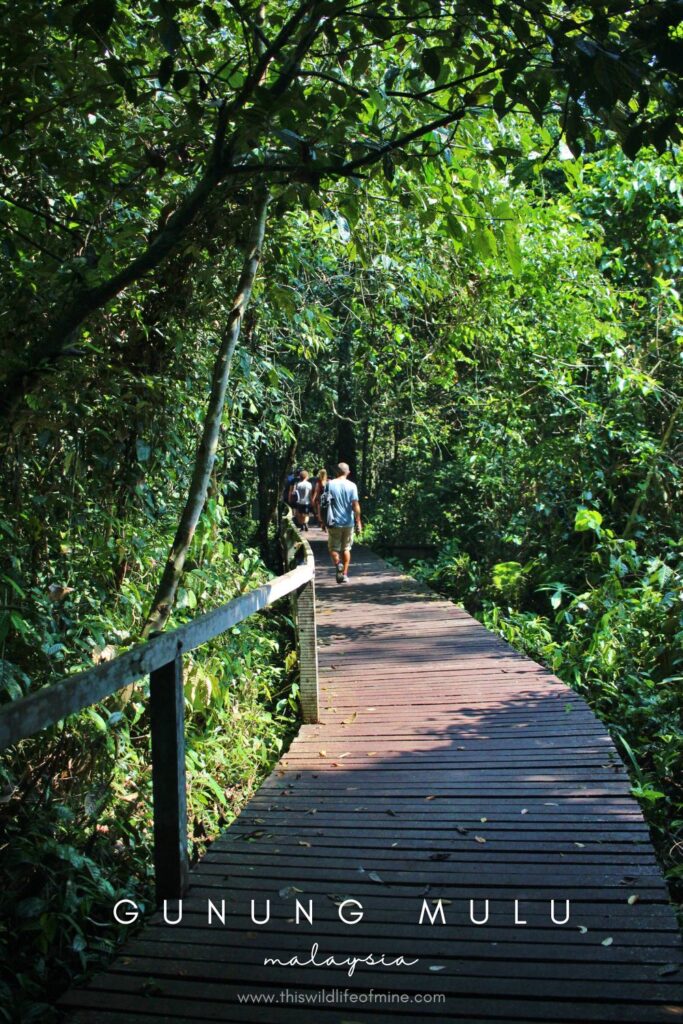
This tour always runs in the afternoon, so if, like me, you arrive in Mulu in the morning, you’ll still have plenty of time to see them. It starts with a 3 km walk along a well-maintained boardwalk through the rainforest, and by the time you arrive at the cave entrances, you’ll feel fully immersed in the nature.
Deer Cave is one of those places that will make you feel small in the best way possible. I’ve never seen nature on this sort of scale before – vaster than any cathedral, as alive as any forest, humans in the distance as miniature as ants on a log. The rustling of wings echoing from high above (nearly 200 metres tall in places!), a warm breeze passing through the huge chamber, drops of water from the ceiling louder than they should be. Our time in Deer Cave – in all the caves – was far too short to really take it in. At the far end of the passage open to the public is the Garden of Eden, a stunning area lit by sunlight through a large sinkhole, the floor of the cave covered in thick forest.
My heart was breaking, and all I wanted was to be left alone, but there’s nothing like walking through one of the world’s largest cave chambers to distract you from your problems.
Lang Cave may not be as impressive in size as Deer Cave, but it has some truly amazing cave formations, and more bats live here, the smaller space making them easier to see. Stalagmites and stalactites of every shape and size fill the cave, the sound of dripping water echoing through the passageways. It only takes five minutes to walk between the two caves. Just remember, while you can walk along the forest paths at any time, you cannot enter any cave without a guide.

Cave of the Winds & Clearwater Cave
The following morning, I joined my second cave tour. Cave of the Winds and Clearwater Cave are always visited in the morning, so it is possible to see all four show caves in one day.
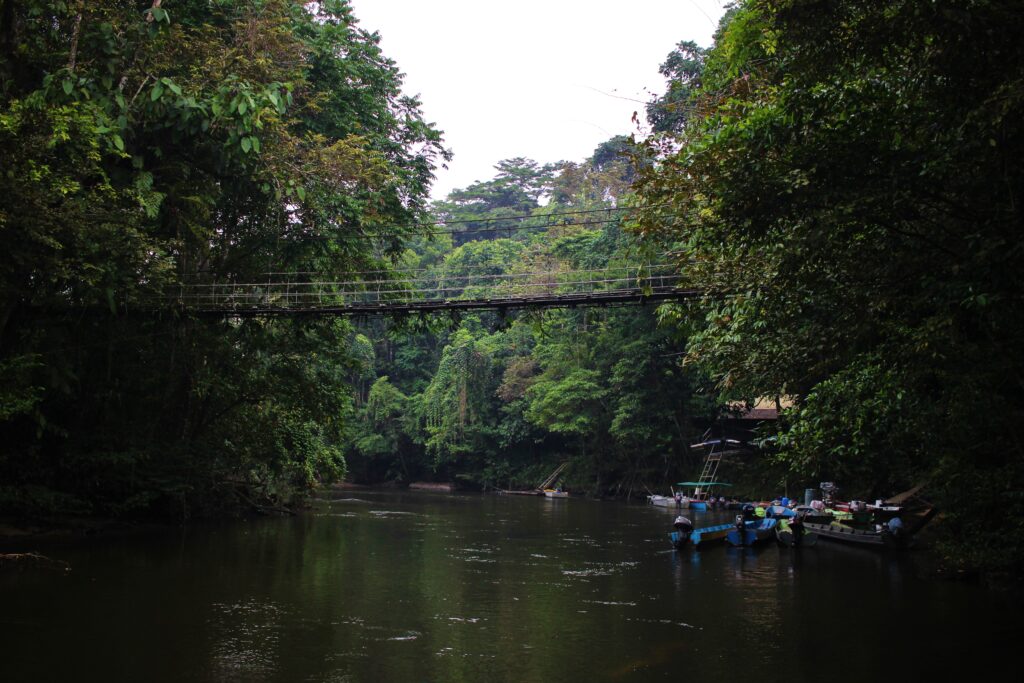
These two caves are in a different and farther away part of the park, so the tour starts with a boat ride along the Melinau Paku River, thick rainforest on either bank. It’s another way to see the park, and I loved the boat ride so much. Along the way, you also stop at Batu Bungan, a small village where you can peruse market stalls with local, handmade items, many made from natural resources found within the park (except on Sundays, when the market is closed).
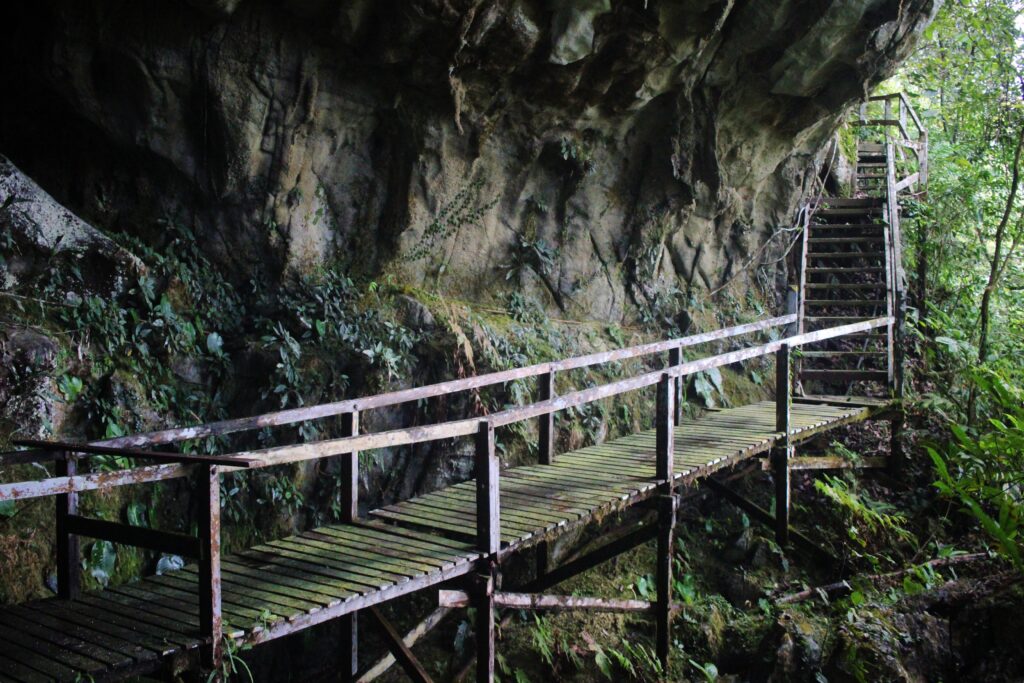
Cave of the Winds is reached by a long series of ramps and steps. A cool breeze blows through the cave, giving it its name. It has some really unique rock formations, and you can often hear the trickle of the underground river that carved these passages.
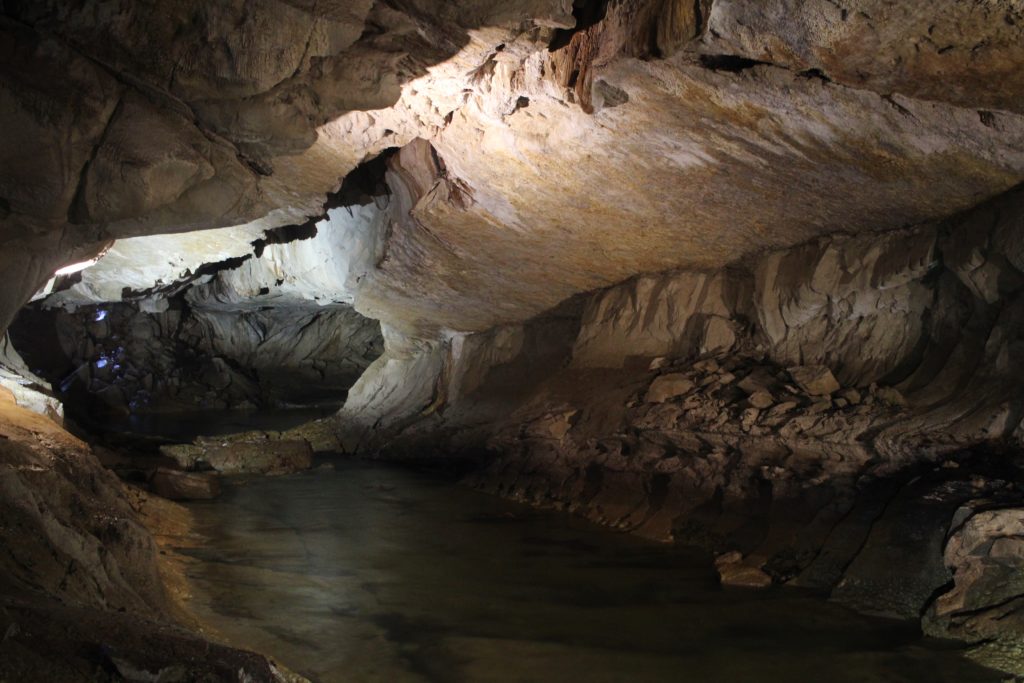
A short walk and 200 steps downwards brings you to Clearwater Cave, the seventh-longest cave in the world at almost 270 km long, and the longest in South East Asia. The river that runs through the cave absolutely lives up to its name – crystal clear and completely pure. Just outside the cave, the river joins the Melinau Paku, and this is a beautiful place to go for a swim after leaving the cave. The water is absolutely freezing, but is great for a much-needed break from the heat and humidity of the forest.

Treetop Canopy Walk
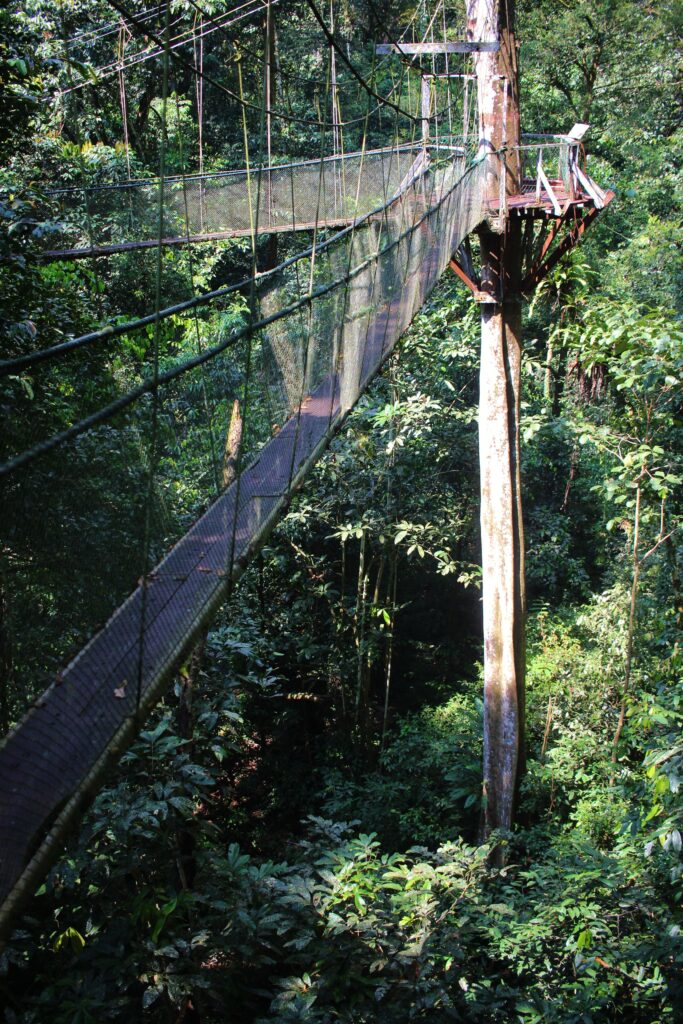
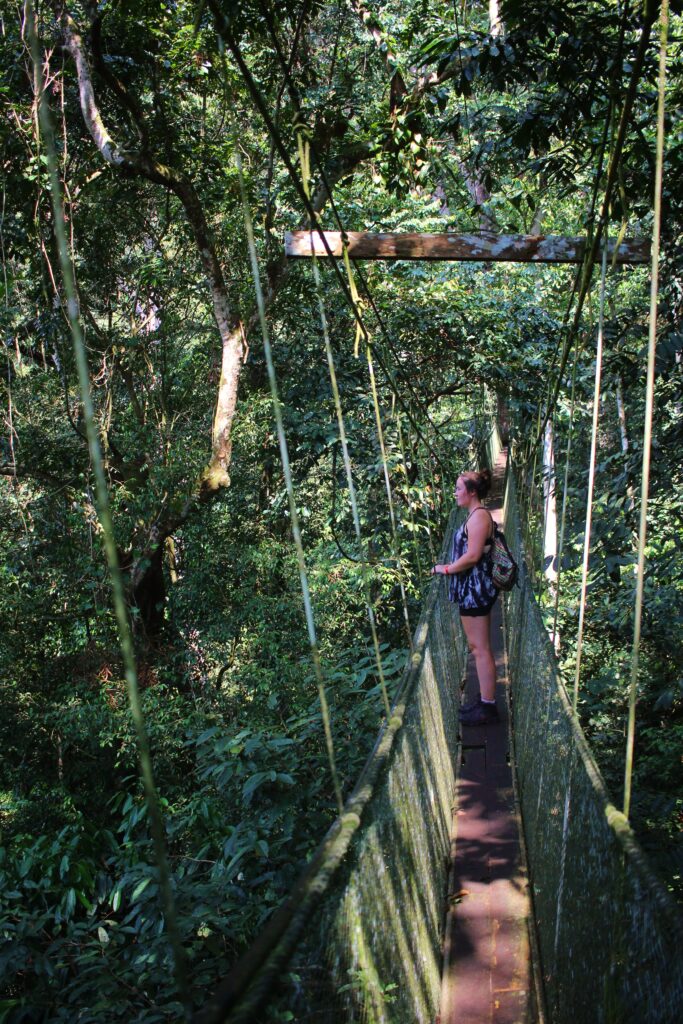
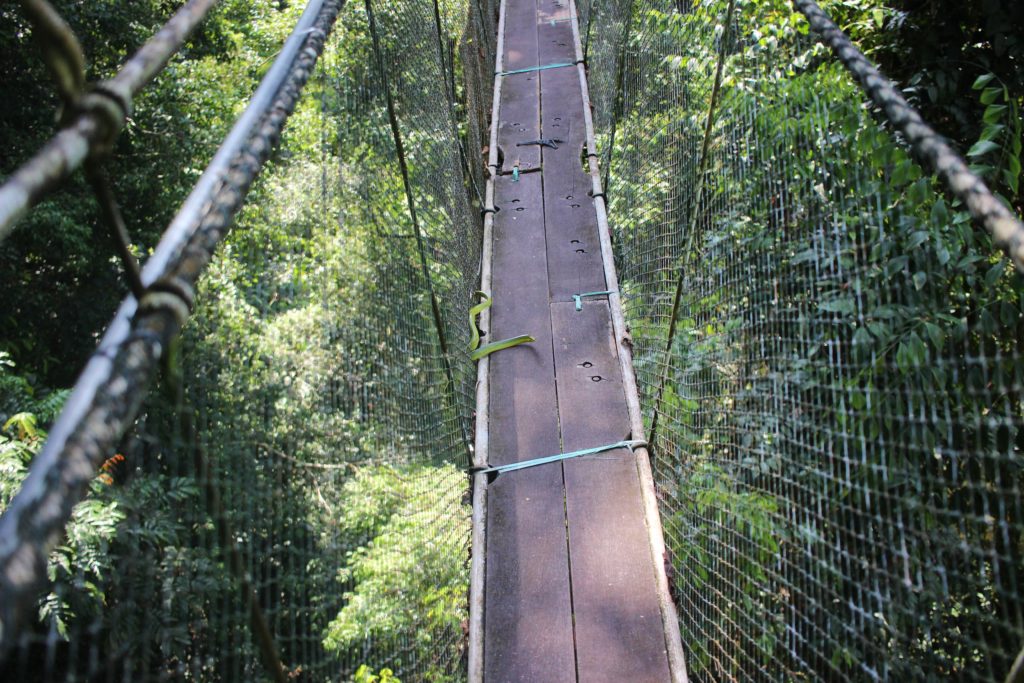
I’ll be honest here and say that the Canopy Walk is not worth the money you pay for it, especially when you consider it’s not much cheaper than either cave tour. Yes, it’s quite cool to see the forest from up high, but for what they charge, it just didn’t feel like an incredible experience. There was a surprising lack of wildlife to be seen. Maybe if you were allowed to stay up on the rope bridges for a while to see if any animals appear, but you are encouraged to keep moving.
Although, I won’t ever forget facing off with a curious snake half-way across a swaying rope bridge. I found out after that it was completely harmless, but that didn’t mean my heart wasn’t pounding at the time!
Wildlife of Mulu National Park
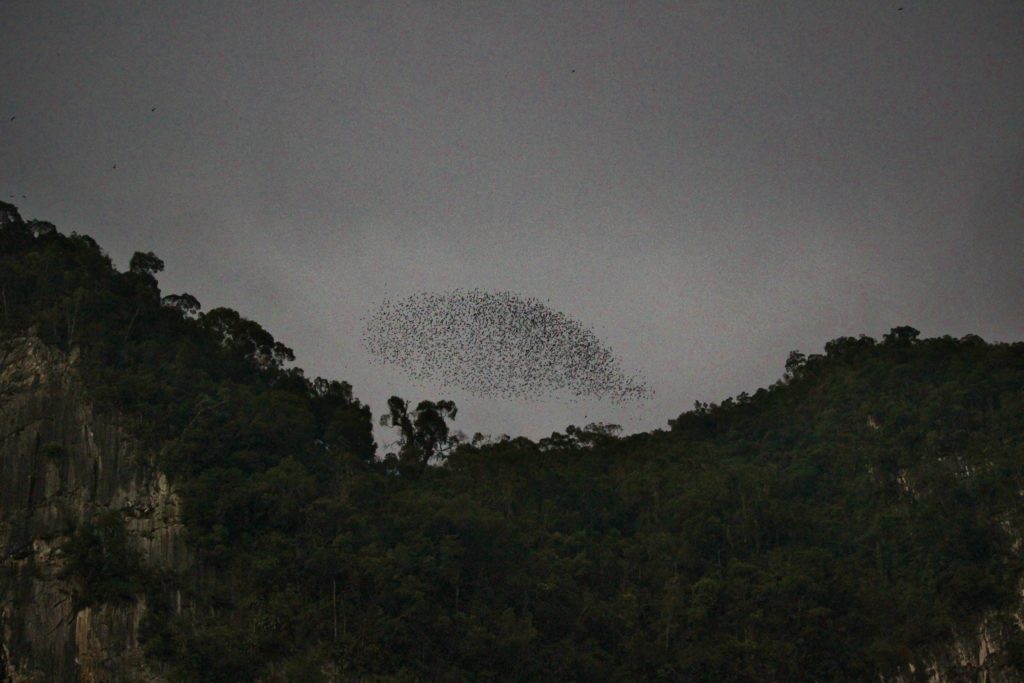
Just as famous as Mulu’s caves are the bats that inhabit them. About three million of them live inside Deer Cave, and almost every night a large portion leave the cave to feed. They call it the Bat Exodus. The Lang & Deer Cave tours are timed to finish shortly before the exodus begins, so it’s perfect timing.
As night falls, a crowd gathers in a clearing near Deer Cave to wait. There’s silence, then a quiet murmuring as people become impatient, then gasps and cries as the first bats appear. They fly in large groups, the dark shadow of bodies twisting and bending as one. They pass briefly overhead, then are gone beyond the trees. We wait for the next one. Seeing the bats is not a guarantee, so if you’re disappointed one night, I definitely recommend going back the next. The show the second night was much more impressive than the first (except for the torrential downpour I got caught in on the way back).

Whenever you’re walking through the park to the various caves or hiking trails, keep your eyes peeled for wildlife big and small. There are over 80 species of mammals, 270 bird species and 55 reptile species amongst the animals found in Mulu. However, since most of the time I was part of large groups moving through the most-trafficked areas of the park, I’m not surprised I didn’t spot larger wildlife like gibbons, sun bears, even pangolins. Getting away from the main tourist areas might increase your chances of seeing species like these.
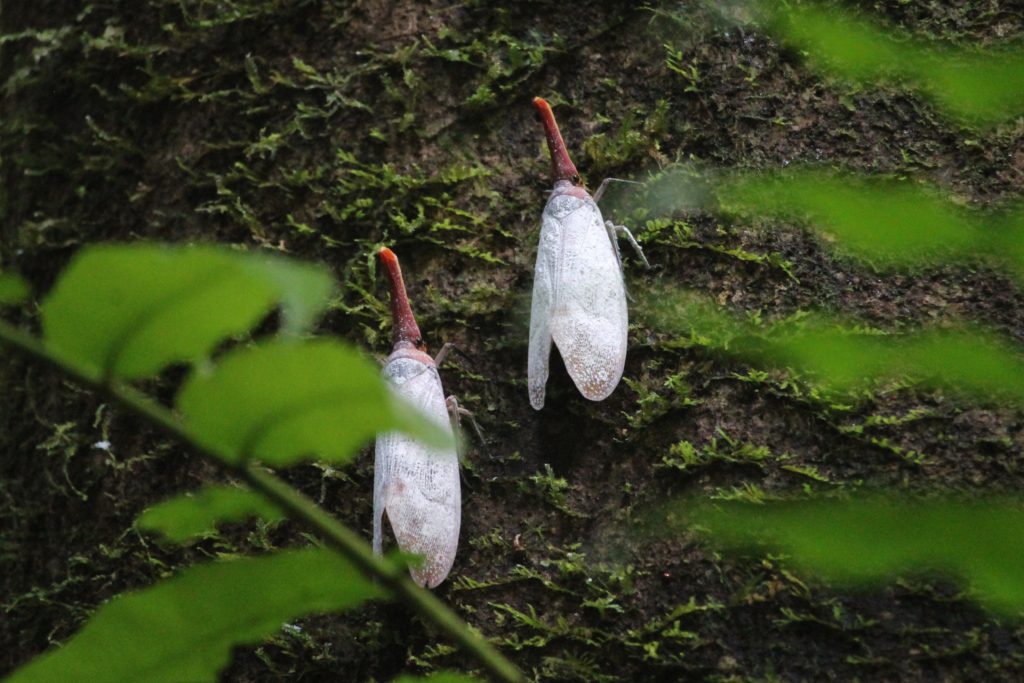
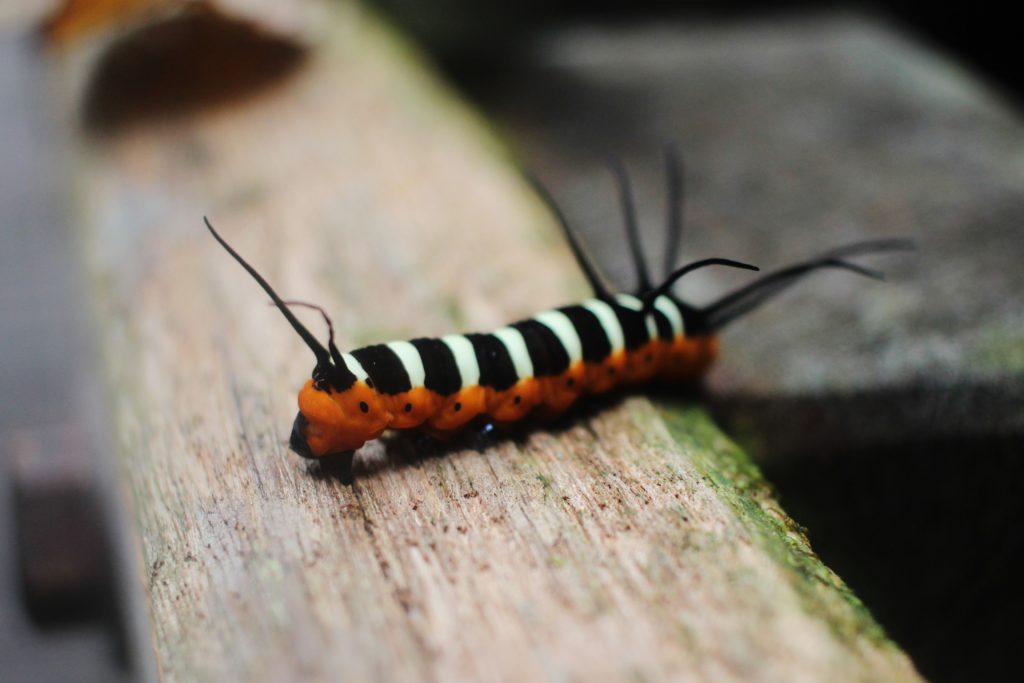
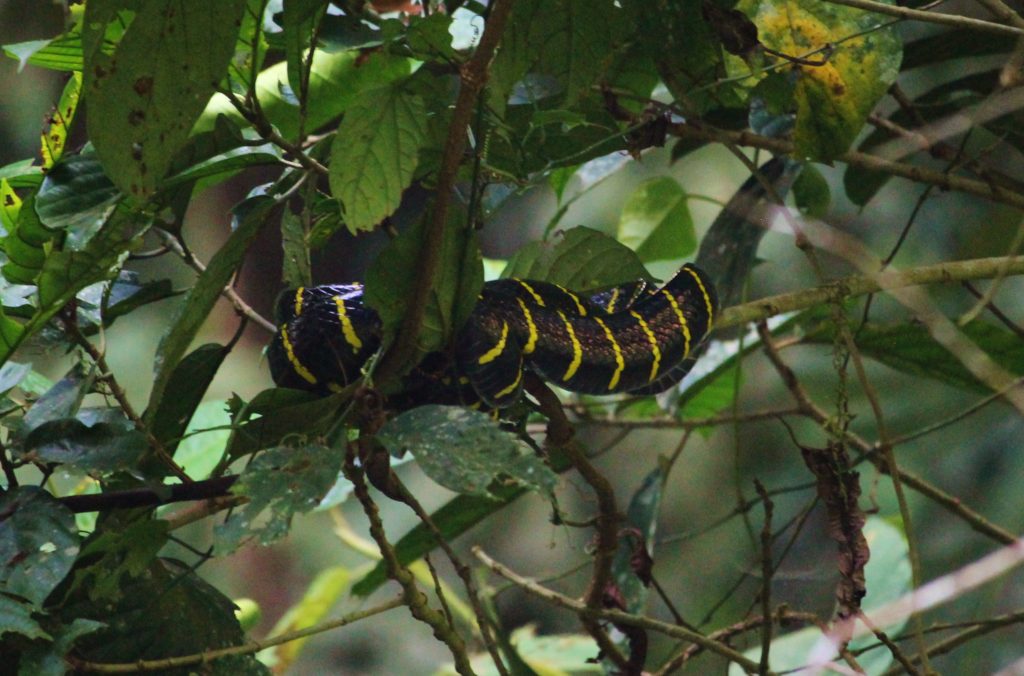
There are plenty of smaller animals to look out for, including reptiles and insects. Colourful (and dangerous) caterpillars often crawl along the boardwalk fences, and I spotted bright lantern bugs on multiple tree trunks. Snakes can be seen curled in branches too, so stay alert and you never know what you’ll find!
Paku Waterfall
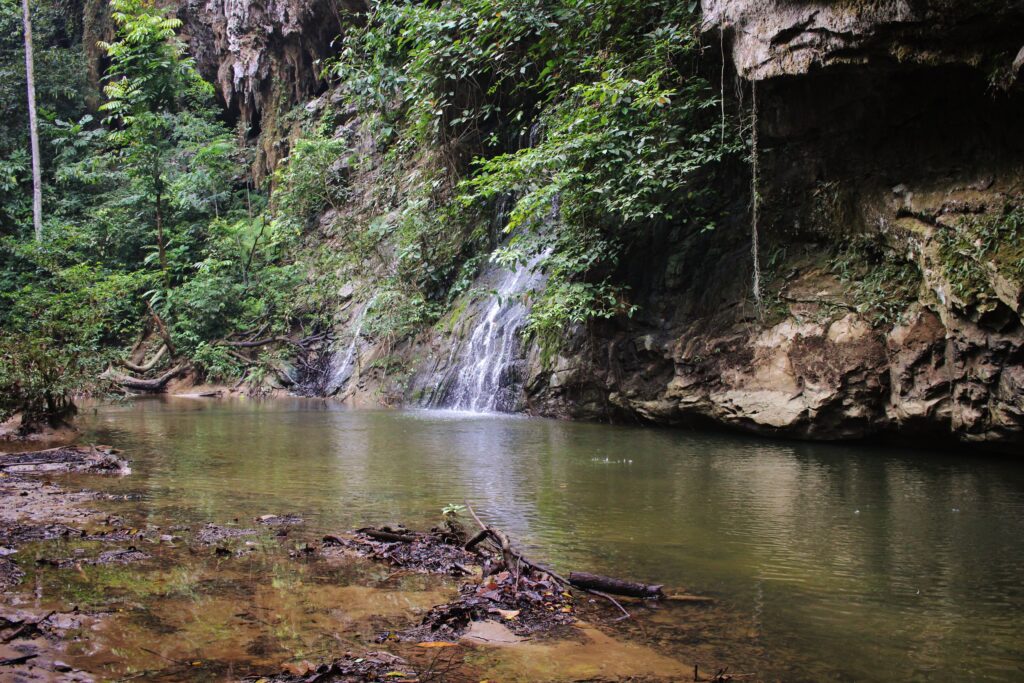
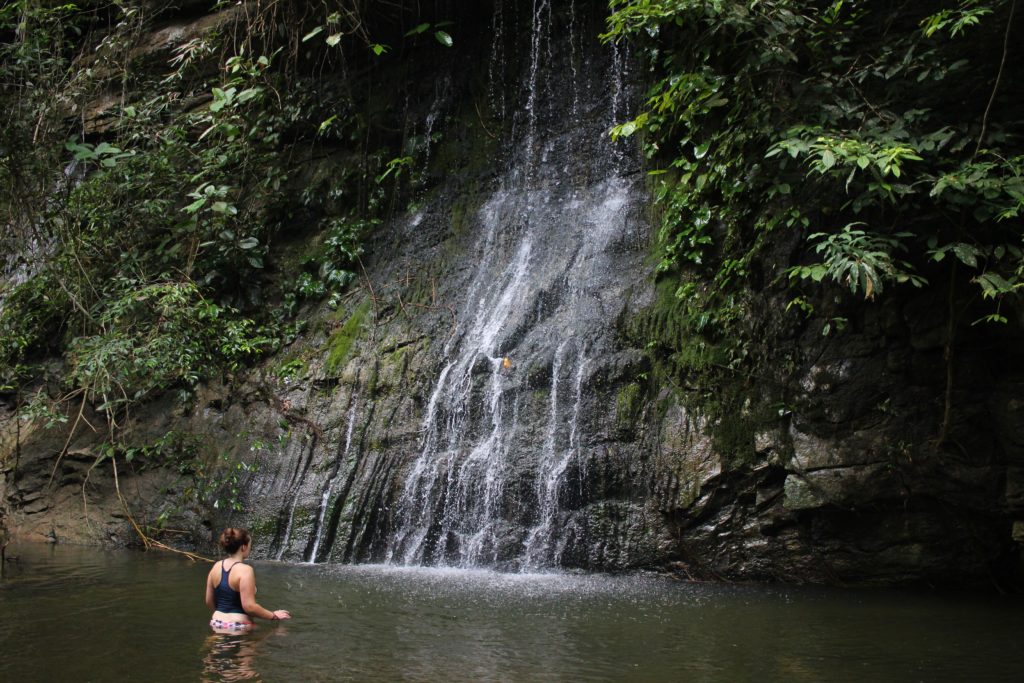
My final morning in Mulu National Park was spent on a muddy hike through the rainforest to find Paku Waterfall. A refreshing (i.e. very, very cold) swim with some inquisitive fish was such a great way to end my time at the park, with plenty of time to spare before my flight back to Miri that afternoon.
This is the most accessible waterfall in the park, a couple of kilometres walk from the park office. You will leave the boardwalk to get there, so the trail can be quite wet, so bear that in mind when choosing footwear. It may not be the most impressive waterfall you’ll see, but it’s a nice way to kill a couple of hours if you want an easy enough walk in the forest.
When it was time to leave Mulu, I was still hurting, the lump in the my throat and tightness in my chest a regular occurrence, but I felt so much better after those two days than I could have imagined. Although ‘better’ might not be the right term, more like numb. For giving me a chance to smile and enjoy myself in those first few days, I will always be so thankful to the wonders of Mulu National Park.
More Activities in Mulu
If you have longer at the park, there are more activities and tours you can do. Adventure tours take you deeper into the caves, and you can even hike to the Summit of Gunung Mulu itself if you’re very fit and have a few extra days (the tour is four days/three nights and considered extremely difficult). Check the official website for more details.
The Pinnacles is such a unique area within the park, with towering limestone pillars jutting up from Mount Api. Reaching them can only be done as part of a three-day tour, including very basic sleeping quarters, difficult trails and near-vertical climbs with ladders and ropes.
There is also a Treetop Tower, which can be combined with the unguided Botanical Heritage Trail, which is around 1.5 km long. The trail has many information signs along it that give great insights into the floral, fauna and geology of the park. If you want to visit the Treetop Tower, you’ll have to get a key from the park office first.
Night Walks are another way to see the rainforest, with an experienced guide pointing out the nocturnal inhabitants of Mulu. These tours are VERY weather-dependent.
Protecting Mulu
Respect wildlife by keeping your distance and not feeding or leaving food behind. Follow the ‘Leave No Trace’ policy by making sure that anything you bring into the park comes back out with you again, including litter and food.
When inside the caves, don’t touch the stalactites, stalagmites or other rock formations. These slow-growing geological features are very sensitive to the oils and chemicals found on our skin. Even a single touch can cause discolouration and slow or even stop the growth process. Admire from a distance and these natural wonders can stay pristine for years to come.
Practical Information
Where to stay in Mulu
Accommodation is a bit limited in the area, but there is a range from basic homestays to a five-star hotel if you really want to treat yourself. The Mulu Marriott is a luxurious, riverside resort that would make for a memorable stay. There is also accommodation within the Park Headquarters – you couldn’t be any closer to the action here.
How to get to and around Mulu
- Flights from Miri are very reasonable and take just 30 minutes. I booked only a few days in advance and there was still availability. All flights with Malaysia Airlines seem to be a similar price: around RM200-250 (around €50/US$60) return. You can also take longer flights from Kuching and Kota Kinabalu.
- Don’t bother paying for transport at Mulu. From the airport it’s about a four-minute walk to the cheapest backpackers, and only fifteen minutes to the Park entrance. A lot of accommodation offers free transfers too.
When to visit
June to September is considered high season, with larger crowds and tours that book up faster. Weather stays similar year-round, with rainy periods mostly limited to the afternoons and evenings. Humidity can get very high at these times. Temperatures are on average low-mid 20 degrees (Celsius) at night and up to mid-30s during the day.
Fees & Tours
- All visitors to Mulu National Park must purchase a Park Pass. These are valid for five days, even if you’re staying for less time. If you’re staying for longer than five days, you will need to purchase a second pass. Passes cost RM30 for non-Malaysian adults (RM10 for non-Malaysian children). Don’t lose your pass, otherwise you’ll have to buy another!
- Since February 2026, there are extra conservation fees applicable on top of the Park Pass fee: RM20 for each visitor accompanied by freelance guides or tour operators, then an extra RM10 for visitors to Camp 5, and an extra RM15 for visitors to the Summit and Headhunters Trails.
- There’s no way to see the caves without a tour, and heavy penalties apply if you try. I usually don’t like doing tours, but the guides are very well informed, and the caves can be dangerous if you don’t know where you’re going. Prices accurate as of May 2026.
- Deer & Lang Cave: RM35 / €7 / US$8.50
- Clearwater Cave & Cave of the Winds: RM70/ €14.50 / US$17
- Treetop Canopy Walk: RM50 / €10 / US$12
- Fastlane Cave: RM70 / €14.50 / US$17
- Treetop Tower: free
- Night Walk: RM35 / €7 / US$8.50
- Pinnacles: RM465 / €101 / US$118
- Summit: RM660 / €144 / US$167
- If you want to experience Mulu without the hassle of planning and organising everything yourself, you can join this 3-Day Adventure, where from the moment you land at the airport, your guide will take care of your whole trip.
Have you ever dealt with loss while travelling? Or is there some special place in the world that helped you heal? Share your stories with me below.
If you enjoyed this post, pin it!


[…] Bats, Caves and a Broken Heart – Mulu National Park […]
[…] Read more: Bats, Caves and a Broken Heart – Mulu National Park […]
[…] Gunung Mulu National Park. This park holds a special place in my heart, with its epic caves home to millions of bats and the […]
[…] Read more: Mulu National Park – Bats, Caves and a Broken Heart […]
[…] Five years ago my dog died. It gutted me. Afterwards, I spent about nine months in a numb haze, all while backpacking Asia, working in Australia and getting a dream job in Africa. Would you know it from my social media accounts? Not at all. And while I had some amazing experiences during that time, I was also pretty miserable. Not the kind of travelling lifestyle you want. Eventually the depression subsided, but I was left with hormonal mood swings that controlled my life. It was only in 2018, when I decided to finally see a doctor about it, that I was prescribed a low dose antidepressant for PMS (yes guys, that’s a real thing, and it sucks). And they changed my life. I am not at all ashamed to admit this to people, it’s a part of who I am, and I am thankful every day not to experience what I used to called my ‘depresso days’ at certain times of the month. […]